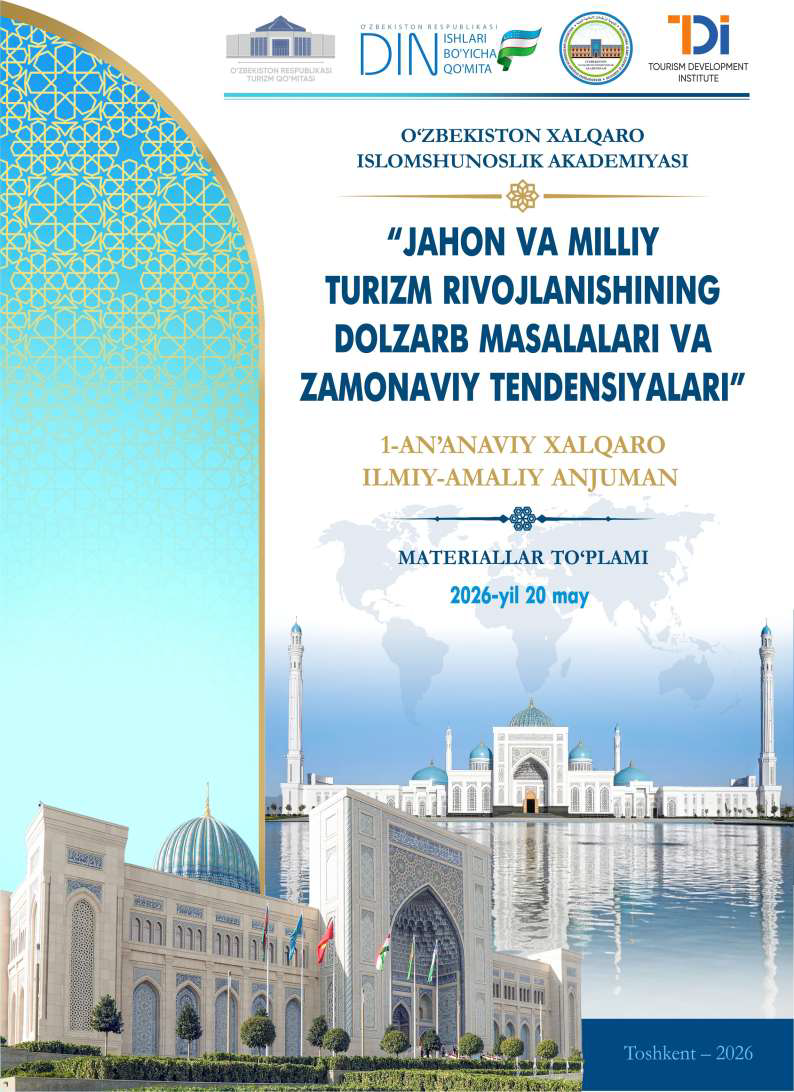
MILLIY TURIZM INDUSTRIYASINI RIVOJLANTIRISHDA MONITORING VA BAHOLASH INDIKATORLARINING ROLI
DOI:
https://doi.org/10.60078/2026-vol1-iss1-pp264-270Abstract
The article provides a comprehensive and in-depth analysis of the theoretical
foundations, types of international standards, role, and practical situation in the Republic of
Uzbekistan regarding monitoring and evaluation indicators in the process of developing the
national tourism industry. The system of recommended indicators for measuring the economic,
social, and environmental impacts of tourism is examined in detail. It shows that monitoring
ensures continuous observation and the formation of a data base, while evaluation provides
scientific analysis of results, assessment of effectiveness, and support for strategic decision-making. Uzbekistan’s tourism record growth in 2025, enriched with statistical tables, dynamic analyses, and additional indicators based on data from the National Statistics Committee, UN Tourism, and WTTC. Existing achievements are highlighted alongside shortcomings, which are deeply assessed. Based on international experience, practical and scientifically grounded recommendations have been developed for establishing a national tourism monitoring center, creating a unified digital platform, utilizing big data and AI, and developing regional observatories.
References
1. UNTourism. International Network of Sustainable Tourism Observatories (INSTO) [Elektron resurs]. – Madrid, 2024. – Kirish rejimi: https://www.unwto.org (murojaat sanasi: 22.04.2026).
2. UNTourism. Guidebook on Indicators of Sustainable Development for Tourism Destinations. – Madrid: UNWTO, 2004. – 507 p.
3. Global Sustainable Tourism Council. GSTC Destination Criteria [Elektron resurs]. – 2023. – Kirish rejimi: https://www.gstcouncil.org (murojaat sanasi: 22.04.2026).
Downloads
Published
How to Cite
Issue
Section
License

This work is licensed under a Creative Commons Attribution 4.0 International License.